Thursday, 14 January 2021

IIT Kharagpur Researchers Develop UAV-assisted 5G Infrastructure


IIT Kharagpur Researchers Develop UAV-assisted 5G Infrastructure


Biswabrata Goswami

Hummingbird News 

KHARAGPUR, 13 JAN: Researchers from G S Sanyal School of Telecommunication at IIT Kharagpur have developed a UAV assisted communication infrastructure for 5G that can serve as an air-borne mobile telecom tower during emergency situations. The system includes an Android-based application fitted to a fleet of drones which are programmed to create emergency communication networks by extending cellular network coverage from the closest available mobile towers.

While 4G is still making inroads in deeper reaches of India, the transition to 5G is eagerly awaited, especially with the popularity of the IoTs triggering a surge in the number of mobile data traffic.  But 5G has a lot more to offer than a faster network. The landscape of future 5G access networks is expected to seamlessly and ubiquitously connect everything, and support at least 1000-fold traffic volumes, 100 billion connected wireless devices, and diversified requirements on reliability, latency, battery lifetime, etc.

Flying base stations are a feature that enhances wireless capacity and coverage footprint on the ground with ultra-dense traffic demands, to meet the requirements of 5G and B5G cellular communications. Such a UAV-based network is inhabitable for various applications such as setting-up emergency communication networks over disaster regions, acting as a relay or maintains Quality of Service over densely populated areas like concerts, fests, and stadiums. 

UAVs, however, have one major challenge – the battery life of the device which is about 45 minutes which makes it difficult to maintain consistency in the service. Further, in an emergency situation, it is crucial to protect critical data within a micro span of time.

The research team at IIT Kharagpur comprising of Kirtan Gopal Panda, Shrayan Das, Bharat Dwivedi, Aunullah Qaiser and led by Prof. Debarati Sen, at the G S Sanyal School of Telecommunication set up by HCL co-founder Arjun Malhotra, have responded to this bottleneck.

“Through intelligent programming, we can deploy our 5G-connected drone fleet in a particular location as soon as the first emergency signal is flagged and complete the evacuation of the endangered data in the telecommunication backbone network within the first 3 minutes of occurrence of a disaster. The drones will relay the data to the rescue server which is located thousands of miles away while restoring the network connection through the nearest mobile tower,” said Prof. Debarati Sen. 

In the case of network disruptions, the drones can intelligently avoid it by changing their location and bypassing the jam. In addition to data protection, the localization and rescue based services can be used to locate survivors and provide emergency aid while decreasing the time for first responders. For people traveling to an affected region and devoid of any cellular network, they can be auto-connected to such nearby drone service as they search for a mobile network.

“We have already studied the performance of the UAV network with the APP ‘NerQuake’ in situations of emergency response in disaster management and maintenance of the quality of service by deploying a fleet of four unmanned aerial vehicles. We have used network coverage data of various mobile service providers in the North-Eastern states in verifying the functionality of the APP,” remarked Prof. Sen. 

The team has submitted the phase-I report to MEITY, Govt. of India who has been funding the project. The researchers are open to the commercialization of this intelligent UAV system.

“The prospects of this system are wide-ranging. Apart from a disaster situation, these smart drones can be used for crowd management. These can further be used to extract data from smart meters without any manned service at the location or surveillance of remote terrains with the transmission of real-time surveillance data. In agriculture, these UAVs can be used for crop health monitoring and pesticide spray on crops,” added the researchers.

Courtesy: Inputs/Images IIT-KGP

Wednesday, 13 January 2021

IIT Guwahati researchers find new clues to how and why stars die


IIT Guwahati researchers find new clues to how and why stars die

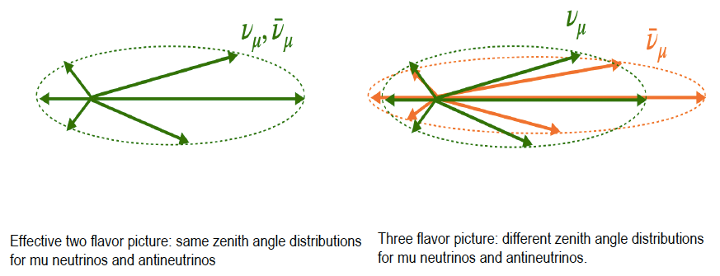
Neutrinos are considered to be the most crucial ingredient in the mechanism of core collapse supernova explosions, death of large, massive stars. New research has found thatincluding all three neutrino and antineutrino species emitted from a supernovarevealed more clues to the mystery of the dying stars.Commonly ignored mu-tau neutrinos may hold the key to understand the neutrino impact on supernovae explosions.


Biswabrata Goswami

Hummingbird News 

GUWAHATI, 12JAN: Researchers from the Indian Institute of Technology (IIT), Guwahati in collaboration with researchers from Max Planck Institute for Physics, Munich, Germany, and Northwestern University, USA, have revealed important clues to understand the death of massive stars and have also revealed the problems with the existing models. They found that all three species of the neutrinos from the supernovae are important contrary to the common treatments with only two flavors.

The results of this crucial work have been recently published in the journal, Physical Review Letters (PRL),and has garnered worldwide attention from the astrophysics community. The research has been carried out by Dr. Sovan Chakraborty, Assistant Professor, Department of Physics, IIT Guwahati, along with his research scholar, Ms. Madhurima Chakraborty, in collaboration with Dr. Francesco Capozzi, Postdoctoral fellow, Max Planck Institute for Physics, Munich, Germany, and Dr. Manibrata Sen, Postdoctoral fellow, Northwestern University, USA.

Supernovae: the super explosions at the time of death of large massive stars are considered to be the cradle of birth for new stars and synthesis of the heavy elements in nature. At the end of their life, the stars, especially massive ones, collapse resulting in an immense shock wave that causes the star to explode, briefly outshining any other star in its host galaxy. The study of supernovae and the particles they release helps us understand the universe because almost all matter that makes up the universe is a result of these massive explosions.

“However, the mechanism of these super explosions is not yet completely solved and has remained one of the enigmas of nature”,says Dr. Sovan Chakraborty,Assistant Professor, Department of Physics, IIT Guwahati. The solutions to the toughest challenges to the core collapse mechanism of the huge supernovae come from the tiniest subatomic particles called neutrinos.

During the core collapse supernova explosion, neutrinos are created in several particle processes. Due to their neutral nature and extremely weak interaction with stellar matter the neutrinos escape the dying star and carry 99% energy of the collapsing star. Thus the tiny neutrinos are the only messenger bringing information from the deepest interiors of the star. The Nobel physics prize in 2002 was shared by Masatoshi Koshiba for the detection of neutrinos from the Supernova SN1987A at the Kamiokande neutrino detector situated in Japan.

Neutrinos on the other hand have their own complexities. In the last seven decades after the discovery of neutrinos physicists have come a long way in understanding these incredible particles. However, there are still many open questions like understanding their flavor structure and the ordering of the masses of different neutrinos. In fact, supernovae are the only natural source where neutrinos and antineutrinos of all three species (electron, mu and tau ‘flavors’) are produced in substantial amounts. This creates additional complexities.

However, the existing supernovae models predicted that the mu & tau neutrinos & antineutrinos have very similar properties and are considered as a single species. This simplified the supernova neutrino problem and most studies are done under the assumption that all types behave the same way when ejected from the star’s dying core.

Speaking about this Dr. Sovan Chakraborty explains, “This information is very crucial for the reason that in the extremely dense supernovae core neutrinos interact with other neutrinos and may interchange flavors. This conversion may happen rapidly (in nanosecond time scale) and flavor interchange can affect the supernovae process as the different flavors are emitted with different angular distribution. These ’fast' conversions are nonlinear in nature and are not confronted in any other neutrino sources but supernovae. We for the first time did a non-linear simulation of fast conversion with ‘all’ the three neutrino flavors in supernovae.”

This becomes possible as new supernova simulations show the presence of muons in the supernovae and in turn produce asymmetry between muon neutrinos and antineutrinos, taken to be zero otherwise, implying three flavor effects.

Co-author Dr. Manibrata Sen pointed out, “These three flavor studies change the results dramatically in comparison to the existing two flavor results and can have major implications for particle and astrophysics of supernovae neutrinos”.

Dr. Francesco Capozzi, presently a Postdoctoral fellow at the Virginia tech University, USA cautioned,“The models used in our research work too have some simplifications, more generic studies are being done by our team and other competing groups. The clearer answers will need more precise muon supernova simulations which are appearing to be one of the most promising solution to the problems of core collapse mechanism”.

Meanwhile, these new results give a clear message that the differences between the three flavors of neutrinos are all relevant, and ignoring the presence of any of the flavors gives us an incomplete picture of fast flavor exchange.

Dr. Chakraborty added,“Three flavor studies are essential as the fast oscillations may actually influence the solution to the question, i.e., why and how some massive stars die as supernovae and some don't.”

Trinamul Congress MP Sisir Adhikari removed as DSDA chairman


Trinamul Congress MP Sisir Adhikari removed as DSDA chairman


Biswabrata Goswami

Hummingbird News 

MIDNAPORE, 12 JAN: Veteran Trinamul Congress leader Sisir Adhikari has been removed from the post of chairman of Digha Shankarpur Development Authority (DSDA) by the state government today.

A notification has been issued by the state government reconstituting the DSDA. TMC MLA Akhil Giri has been appointed to the post.

The development assumes significance in the wake of Mr. Adhikari’s son and former Bengal Minister Suvendu Adhikari severing his ties with the TMC and joining the BJP. Sisir Adhikari, MP from Purba Medinipur Kanthi Lok Sabha constituency, however, remains with the TMC. His younger son Dibyendu Adhikari is also a TMC MP from Tamluk constituency in the same district.

A few days ago, the TMC removed Soumendu Adhikari, another member of the Adhikari family, from the post of chairman of board of administrators of Contai Municipality. Following the footsteps of his brother, Mr. Soumendu Adhikari also joined the BJP.

The removal of the veteran Trinamul leader from the post indicates his departure from the State’s ruling party is only a matter of time.

Administrators of Egra and Tamluk Municipalities, who were considered close to the Adhikari family, have also been removed from their posts.

"He did not do anything as the chairman of the DSDA. So he has been removed," Giri told reporters on Tuesday.

Adhikari is at present the district president of the TMC in Purba Medinipur.

Adhikari, however, remained unfazed with the development. "They can do whatever they want. I am not bothered," he said.

Following the development, BJP leader Rahul Sinha said that the decision by West Bengal’s governning party reflected its end in near future.

“TMC’s destruction has already begun and the party itself is doing that with this kind of decision,” the former Bengal BJP president Sinha said.

He asked Sisir Adhikari to follow the footsteps of his sons Suvendu and Soumendu and join the saffron camp. “BJP’s door is open to all. This is not a private limited company. It is people’s party,” he said.

TMC, on the other hand, tried to play down the speculations that Sisir Adhikari would soon switch over to BJP. The West Bengal’s governning party said that it was just a regular replacement, as it happens in any other department from time to time.

Tuesday, 12 January 2021

Holding breath may increase risk of getting COVID-19 infection : IIT Madras researchers


Holding breath may increase risk of getting COVID-19 infection : IIT Madras researchers


Biswabrata Goswami

Hummingbird News

CHENNAI, 11 JAN: Indian Institute of Technology, Madras (IIT-Madras) researchers have found that the process of virus-laden droplets being transported into deep lung increases with decreasing breathing frequency.

The research team modelled the breathing frequency in a laboratory and found that low breathing frequency increases the time of residence of the virus and therefore it increases chances of deposition and consequently the infection. Also, the multi-scale lung structure has a significant effect on a person’s susceptibility to COVID-19.

The research was led by Prof. Mahesh Panchagnula, Department of Applied Mechanics, IIT Madras, with his research scholars Mr. Arnab Kumar Mallik and Mr. Soumalya Mukherjee, IIT Madras. The findings of this study were published in the international reputed peer-reviewed journal Physics of Fluids.

Elaborating on the need for such research, Prof. Mahesh Panchagnula, Department of Applied Mechanics, IIT Madras, said, “COVID-19 (the disease caused by Coronavirus) has opened a gap in our understanding of deep pulmonological systemic diseases. Our study unravels the mystery behind how particles are transported and deposited in the deep lung. The study demonstrates the physical process by which aerosol particles are transported into the deep generations of the lung.”

Prof. Mahesh V. Panchagnula’s team worked to gain a deeper understanding of how the rate of flow of droplet laden with virus determines the deposition of the virus in the lungs. In their research, the team reported that holding the breath and having low breathing rate can increase chances of virus deposition in the lungs. The study was conducted to pave the way for developing better therapies and drugs for respiratory infections. Previous work from the group has also highlighted the significant variability in aerosol uptake from individual to individual, suggesting a reason why some people are more susceptible to airborne diseases than others.

Airborne infections such as Coronavirus spread immensely through sneezing and coughing as it instantly releases a lot of tiny droplets. The IIT Madras Research team imitated the droplet dynamics in the lung by studying the movement of droplets in the small capillaries which were of a diameter similar to bronchioles. They took water mixed with fluorescent particles and generated aerosols from this liquid using a nebulizer. These fluorescent aerosols were used to track the movement and deposition of particles in the capillaries.

The researchers studied the movement of the fluorescentaerosol particlesin capillaries of size ranging from 0.3 to 2 millimetres which covers the range of bronchiole diameters. They found that the deposition is inversely proportional to the aspect ratio of capillaries, which suggests that the droplets are likely to deposit in longer bronchioles.

The scientists also studied how the ‘Reynolds Number,’ a parameter that quantifies the nature of flow - steady or turbulent, determines the deposition in the capillaries. They found that when the flow of aerosol movement is steady then the particles deposit via the process of diffusion, however, if the flow is turbulent then the particles deposit via the process of impaction.

In future, the team intends to continue this work to understand how the virus-laden droplets are transported into lungs as the process by which the virus is transported from the nasal cavity to the deep lung is still unknown. An understanding of the physics of this phenomenon could be crucial in mitigating the progression of the disease.

Mamata calls BJP "Bharatiya Junk Party" Country starring food crisis because of BJP


Mamata calls BJP "Bharatiya Junk Party"

            Country starring food crisis because of BJP


Biswabrata Goswami

Hummingbird News  

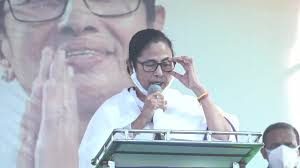
RANAGHAT, 11 JAN: Trinamul Congress chief Mamata Banerjee today took a dig at the Bharatiya Janata Party (BJP), calling it a ‘junk party’ for inducting ‘rotten’ leader from other political outfits.

She said: “BJP is the biggest junk party in the country. It's a dustbin party that is filling up its rank and file with corrupt and rotten leaders from other parties.”

“You must have seen some (TMC) leaders switch over to the BJP. They have done it to protect the public money they had looted. The BJP runs the party like a washing machine, where corrupt leaders turn into saints the moment they join them,” she said while addressing a rally at Habibpur in Ranaghat in Nadia today.

She further said, “When leaders attached with Trinamul are called bad while when they switch to the BJP, they are being treated as good leaders. This is BJP party who inducted the rotten leaders who basically help them to save their money they looted”.

She went on to say, the BJP is either buying leaders by offering money or by intimidating them. They are dreaming to capture Bengal by sheltering all odd people like Abol, Tabol, Ulto, Palta, Landa, Bhanda, Anda, Ganda, Akathya, Kukathya, Akalpaniyo, Kukalpaniyo (Miss Banerjee grimaced). “I say you first control Delhi, then think about Bengal”, Miss Banerjee said.

Referring to the ongoing farmers’ agitation, the Trinamul Congress chief said that India is staring at a food crisis due to the BJP’s ‘adamant’ approach towards the three new farm laws.

“The country is staring at a food crisis. If the BJP continues to remain adamant on the farm laws, there will be a food shortage in our country. The farmers are assets of our country and we should not do anything that goes against their interest,” said Miss Banerjee while addressing the rally ahead of 2021 West Bengal Assembly Elections.

She further sought the immediate withdrawal of the three farm laws, as being demanded by farmers agitating at borders of Delhi.

She further drew a parallel between BJP cadres and US President Donald Trump’s supporters, who forced their way inside the US Capitol recently.

“They (Trump) lost the poll, but they continued shouting they had won the poll. The day the BJP loses elections, its cadre and supporters will behave like that,” claimed Miss Banerjee.

She said, “BJP is claiming that they will make the Bengal as Sonar Bangla. But, what things are left to be developed. We have done a lot for the development of the state. Bengal has already been turned into a Sonar Bangla. So, there is no need to make the Bengal as Sonar Bangla”.

Considering the area dominated by Matua community where her party had lost the election, Miss Banerjee said, “A moya bill has been brought to give citizenship. That bill did not come into effect. The Matuas are all citizens. I informed that. Matuas are being misunderstood. There is no need for a new Moya Bill. The Matuas are already citizens. Is it so easy to take away citizenship?”

“I will not allow NRC-NPR. We will not allow human rights to be violated. This is a policy decision of our government. I have made a board for Matua society. I have given 10 crore rupees. I have made a board for Rajbangshi-Kamatapuri-Namashudras”, Miss Banerjee iterated.

She also criticized Center’s Ayushman scheme saying, “Ayushman gives 60 per cent of the centers in India and the remaining 40 per cent to the states. The government will give 100 out of 100 rupees to the health worker under Swastha Swathi scheme. Now tell me which is better? I myself am a health member. Everyone in your house will get treatment with this card.”

At the end, Miss Banerjee said, “Bengali is always the target of their (BJP) attack. Slander is spreading in the name of this state. I say I will give my head, but I will not let Bengal be sold.”


Monday, 11 January 2021

IIT Gandhinagar invites applications for M.Sc in cognitive science with monthly scholarships


IIT Gandhinagar invites applications for M.Sc in cognitive science with monthly scholarships


Biswabrata Goswami

Hummingbird News  

GANDHINAGAR, 7 January : Indian Institute of Technology Gandhinagar is inviting applications for its M.Sc. in Cognitive Science. The discipline of Cognitive Science is a steadily growing interdisciplinary field consisting of philosophy, psychology, computer science, neuroscience, and Artificial Intelligence.

Now, more than ever, Cognitive Science is growing as a discipline of utmost importance with applications in every major field. The Institute has a state-of-the-art Centre for Cognitive and Brain Sciences, which conducts high-quality research in the frontier areas of cognitive science on various cutting-edge topics such as perception, curiosity, attention, motor learning, decision making, prosthetics, rehabilitation, robotics, consumer behavior, multisensory perception, music cognition, and tactile perception, among other areas.

Respecting the multidisciplinary spirit,this course offers students the flexibility to tailor the course according to their interests. Students are encouraged to take courses from other disciplines, creating a vibrant learning environment.

The students of M.Sc. in Cognitive Science come from a variety of disciplines ranging from psychology, physics, engineering, life sciences and philosophy, among other fields, creating an atmosphere of curiosity and collaboration throughout the course. This course transcends traditional academic boundaries through rigorous multi-disciplinary coursework, focused faculty-mentored projects, exciting summer internships, and an in-depth dissertation.

The Institute is also calling for applications for the Masters in Society and Culture, a unique program that provides students (from any disciplinary background) breadth and focus in the key disciplines within the Humanities and Social Sciences.Successfully running since 2013, students of the MA programme have made their careers in diverse job sectors ranging from prominent media and communication houses, leading NGOs to doctoral students, currently pursuing their PhDs in the United States and Canada.

The deadline for both M.Sc. (Cognitive Science) and M.A. (Society and Culture) is 31st January 2021. Due to the COVID-19 pandemic, both admission tests and interviews for the courses will be conducted online. Applications for these two courses can be obtained from the following link - https://admissions.iitgn.ac.in/loginindex.php


Headlines: Covid Vacciination Drive To Begin On 16 Jan, Nadia Conducts D...