Saturday, 7 November 2020

IIT Kharagpur to have a new center on Indian Knowledge System


IIT Kharagpur to have a new center on Indian Knowledge System


Union Education minister Ramesh Pokhriyal Nishank, today,  announced the Centre of Excellence for the Indian Knowledge System to be set up at IIT Kharagpur.


Biswabrata Goswami

Hummingbird News 

KHARAGPUR, 6 NOV: Union Education minister Ramesh Pokhriyal Nishank, today,  announced the Centre of Excellence for the Indian Knowledge System to be set up at IIT Kharagpur.

Inaugurating the international webinar titled Bharata Tirtha organized by the Institute from November 6-8, 2020, Chief Guest Dr. Nishank congratulated the Institute for the continued work in various branches of the Indian Knowledge System. “IIT Kharagpur has attempted to introspect on the spirit of India, her challenges in the present times and taken the right measures through an initiative like Bharata Tirtha and research.”

Dr Nishank emphasized education through the mother tongue along with the rejuvenation of Sanskrit to ease the educational process for the diverse people of India and draw from the rich educational heritage of India.

Confirming the creation of a National Education Technology Forum to support technical education he motivated researchers to take forward deeper studies in Indian scientific and linguistic heritage and access the historical educational resources which are still available.

He remarked, “Initiatives like Study in India, GIAN, GIAN+ and other funded research programs could be the right resources to spread this to the global students and researchers community.”

Dr Nishank further called for excellence in research to accentuate the quality of India which has sustained the culture despite the turmoil over centuries.

Guest of Honour, Mr Sanjay Dhotre opined on the need to critically study and analyze the interdisciplinary nature Indian Knowledge System in the present times. 

“Spectacular achievements of the past can inspire us but cannot sustain us in the present. It is our responsibility to equip the Indian Knowledge System with Indian ethos and values and attempt pursuit of excellence in every chosen field,” he said.

He hoped NEP 2020 will promote this spirit of India. “NEP 2020 is based not only on cognitive capacities but also social, ethical and emotional capacities which will ensure quality education to all students despite their geographical, economic and social position especially for the historically marginalized and disadvantaged groups,” he added.

Prof. Virendra K Tewari, Director, IIT Kharagpur, expressed the need to acknowledge and incentivize research work on Indian Scientific Heritage by awarding the prestigious Shanti Swarup Bhatnagar Prize.

“SS Bhatnagar Prize is a dream goal for science and technology researchers in India. I would like to request our Hon'ble Shiksha Mantri ji Shri Ramesh Pokhriyal Nishank to contemplate on proposing the Hon'ble Minister for Science & Technology Dr. Harsh Vardhan to create a new vertical on Indian scientific heritage under this prestigious Prize.”

The three-day webinar will witness talks by international stalwarts pioneering in Indic studies including Arthashastra (Economics), Sanskrit for Natural Language Processing, Vedic and Ancient Indian Mathematics - Numeral System, Bijaganita and Jyamiti, Rasayana (Chemical Sciences), Ayurveda (Biological Sciences), Jyotir-tatha Mahajagatika Vidya (Positional and Astronomical Sciences), Prakriti Vidya (Terrestrial/ Material Sciences/ Ecology and Atmospheric Sciences) and Nandana Tathya tatha Vastu Vidya (Archaeology, Iconography and Architecture).

Thursday, 5 November 2020

Watch: The death knell of Mamata Banerjee's government has rung : Amit Shah

IIT Madras Alumni Association Launches Free 'Masterclass' Series to Upskill Indians in the Pandemic Era


IIT Madras Alumni Association Launches Free 'Masterclass' Series to Upskill Indians in the Pandemic Era

As part of its Annual Flagship Event ‘Sangam 2020,’ IITMAA is also conducting a unique survey on ‘public attitude towards science and technology’ in partnership with Office of Principal Scientific Adviser


Biswabrata Goswami

Hummingbird News

KRISHNAGAR, 4 NOV: IIT Madras Alumni Association (IITMAA) is launching a ‘Masterclass’ series to help Indians, especially working professionals and students, grow on professional and personal dimensions in the ‘new normal’ brought about by the COVID-19 pandemic era. These Masterclasses are being offered completely free of cost.

These initiatives are part of the Association’s Annual Flagship global event ‘Sangam 2020,’ which will be held virtually from 1st to 6th December 2020. Under the theme ‘Driving the New Normal’, Sangam 2020 will deliberate how Governments, businesses and individuals can convert this moment of crisis caused by the global pandemic to an era of opportunities.

Further, IITMAA is also conducting a unique survey in India and abroad in collaboration with the Office of Principal Scientific Adviser, Government of India, to get the people’s perspectives and perceptions on dealing with the new normal and the role of science and technology in that reality. Interested people can take part in the survey through the following link - www.iitmaa.org/sangam

Highlighting the importance of these Masterclasses and how it can help the community at large, Mr. Krishnan Narayanan, Vice President, IIT Madras Alumni Association, and Coordinator, Sangam 2020, said, “Sangam 2020 is about us driving a new normal. In this context, we have carefully chosen the Masterclasses based on feedback from our IIT Madras alumni. The pandemic has deeply impacted our everyday lives and these Masterclasses will teach us skills to respond to these challenges and thrive.”

Sangam 2020 will feature conversations with global leaders such as Dr. Vinay Sahasrabuddhe, Member of Parliament, and National Vice President, Bharatiya Janata Party (BJP), Prof. K Vijay Raghavan, Principal Scientific Adviser, Government of India, Shri Kris Gopalakrishnan, co-founder of Infosys, Sir Mark Welland, University of Cambridge, U.K., Prof. Subra Suresh, President, Nanyang Technological University Singapore and Mr. Sridhar Vembu, Founder and CEO of Zoho Corporation.

Speaking about how the Survey will contribute to India’s development through Sangam 2020, Prof. Seeram Ramakrishna, FREng Distinguished Alumnus of IIT Madras, and Coordinator Sangam 2020 said, “Around the world, such surveys to gauge the public attitudes towards science and technology are common. We are excited to be conducting such an important survey, for the first time, among the public in India. We believe that the survey results will be a source of valuable input to the science and technology planning process in the country and thus enabling India to become a five trillion dollars economy.”

International Webinar by IIT Kharagpur on Indian Knowledge Systems to Explore Revival of Indian Scientific Heritage Studies in Technical Institutes


International Webinar by IIT Kharagpur on Indian Knowledge Systems to Explore Revival of Indian Scientific Heritage Studies in Technical Institutes


Biswabrata Goswami

Hummingbird News

KHARAGPUR, 4 NOV: IIT Kharagpur is organizing an international webinar on Indian Knowledge Systems from November 6-8, 2020. Titled BharataTirtha after Gurudev Rabindranath Tagore poem, the webinar aims to trace the philosophical and scientific heritage of India and make progress towards the future of Indology and its application to the contemporary human world in correlation with the physical, economic, environmental, and social sphere of human life.

The webinar shall be commensurate with India’s current National Education Policy (NEP) to best position India’s scientific heritage within the ambit of the pursuit of advanced science and technology.

It will witness talks by international stalwarts pioneering in Indic studies including Arthashastra (Economics), Sanskrit for Natural Language Processing, Vedic and Ancient Indian Mathematics - Numeral System, Bijaganita and Jyamiti, Rasayana (Chemical Sciences), Ayurveda (Biological Sciences), Jyotir-tathaMahajagatikaVidya (Positional and Astronomical Sciences), PrakritiVidya (Terrestrial/ Material Sciences/ Ecology and Atmospheric Sciences) and NandanaTathyatathaVastuVidya (Archaeology, Iconography and Architecture).

Shri Ramesh PokhriyalNishank, Hon’ble ShikshaMantri will be present as the Chief Guest. He will be joined by Shri Sanjay Dhotre, Hon’ble MoS, Education Ministry and Shri Amit Khare, Secretary Higher Education, Govt. of India, as the guests of honour.

Talking about the way forward for the IITs in the subject area of Indian Knowledge Systems, Director, IIT Kharagpur Prof. Virendra K Tewari remarked on the need to create and promote an Independent Center of Indian Knowledge Systems to revive the interest of students and faculty in Indian heritage and recreate a comprehensive and positive atmosphere of research, and outreach to humanity as a whole. “The webinar which shall be the first among a long series of subsequent ones will create a comprehensive knowledge base and further promote an international policy of Indology. This is in the lines of the several firsts we have achieved in various scientific and technological progress of our nation which has led to us becoming an Institute of Eminence,” he said.

The speakers include Shri Sanjeev Sanyal, Principal Economic Advisor, Govt. of India and Dr. Deepa Sankar, Chief of Education, UNICEF, Uzbekistan (Europe and Central Asia Region) on Arthashastra, Prof. Gérard Huet, National Institute for Research in Computer Science and Automation, France and Prof. Amba Kulkarni, Department of Sanskrit Studies, University of Hyderabad on Sanskrit for Natural Language Processing, Prof. Clemency Montelle, University of Canterbury, New Zealand and Prof. K. Ramasubramanian, IIT Bombay on Vedic and Ancient Indian Mathematics, Prof. B. M. Deb, Visva-Bharati, Santiniketan and Prof. Samaresh Bhattacharya, Jadavpur University, Kolkata on Bharatiya Rasayan, Dr. P. Rammanohar, Amrita Vishwa Vidyapeetham, Coimbatore and Dr. MitaliMukerji, Institute of Genomics and Integrative Biology, New Delhi on Ayurveda, Prof. Mayank N. Vahia, Tata Institute of Fundamental Research, Mumbai and Prof. Amitabha Ghosh, Former Director, IIT Kharagpur on Positional and Astronomical Sciences, Prof. Arunendu Banerjee, Visva-bharati, Santiniketan and RabindraBharati University and Prof. OmkarnathMohanty, IIT Bhubaneswar on Terrestrial/ Material Ecology and Atmospheric Sciences, Dr. Shikha Jain, Director, The DRONAH Foundation, Gurgaon and Dr. RajraniKalra, Urban and Regional Geography Expert, California State University, San Bernardino, USA on Archaeology, Iconography and Architecture. Among the other experts are Prof. M. D. Srinivas, Chairman, Center for Policy Studies, Chennai, as the keynote speaker, Prof. Anil D. Sahasrabudhe, Chairman, AICTE and Prof. Shishir K. Dube, Former Director, IIT Kharagpur as panelists for the session on ‘WAY FORWARD for IITs in Indian Knowledge Systems’. They will be joined by faculty experts from various disciplines at IIT Kharagpur.

The organizing members include Prof. Virendra Kumar Tewari, Director, IIT Kharagpur (chief patron), Prof. S.K. Bhattacharya, Deputy Director, IIT Kharagpur (patron), Prof. Somesh Kumar, Dean of Students’ Affairs, IIT Kharagpur (chairman), Prof. Joy Sen, Department of Architecture and Regional Planning, IIT Kharagpur (organizing secretary), Prof. Anuradha Choudry, Department of Humanities and Social Sciences, IIT Kharagpur (joint secretary).

Monday, 2 November 2020

China deploys H-6 bombers along LAC


China deploys H-6 bombers along LAC


The H-6’s considerable firepower, deploying a wide range of standoff cruise missiles, can potentially provide the PLA with a major advantage in the event of a future clash in the Ladakh region, the report stated. 


By Soma Mookherjee

City Editor, The Statesman

KOLKATA, 1 NOV: China appears to be sticking with its “Wolf Warrior” tactics of intimidation amid simmering tensions with India on its Himalayan border. According to Military Watch Magazine, new images released by the Central Theatre Command of the Chinese People’s Liberation Army (PLA) show several H-6 bombers have been deployed near the disputed Line of Control (LOC).

China deploys over 270 H-6 bombers across the country, the bulk of them based near its east coast, which make up the largest bomber fleet in the world with much newer airframes available than those in the American or Russian fleets, said Grp Captain (rtd) R K Das.

The H-6’s considerable firepower, deploying a wide range of standoff cruise missiles, can potentially provide the PLA with a major advantage in the event of a future clash in the Ladakh region, the report stated. 

Given the scarcity of airbases on both sides, the ability to strike Indian bases at long ranges could be enough to turn the balance in the air.

Most notably, the new CJ-20 cruise missile carries a 500kg warhead and has a 2,000 km range, while its lighter counterpart the YJ-63 has one tenth of the range but is considerably lighter, meaning more can be carried by a single bomber, the report stated.

Their very high precision and manoeuvrability make them a very serious threat to Indian positions, Grp Captain added.

He said, "tensions with India, however reveal that the aircraft still have a role to play in a conventional land attack role, the report said. China has over 270 H-6 bombers across the country, the bulk of them based near east coast. India on the other hand, was reportedly considering acquiring modern bombers from Russia, namely the Tu-22M, to serve as a maritime strike platform. 

It currently deploys  air superiority fighters which have a formidable range estimated at 300-400 km — with the missiles well optimized in engaging subsonic bombers, the report said. India has ordered S400 Air Defense Missile system which will be deployed to the Ladakh region when they are received from Russia, with the platforms highly capable at intercepting cruise missile attacks as well as bombers at long ranges.

Courtesy: Images from Web/ China Military

Sunday, 1 November 2020

Durgapur barrage lock gate breaks once again after 2017, leads to panic among locals


Durgapur barrage lock gate breaks once again after 2017, leads to panic among locals 


"We are expecting to help complete restoration in next couple of days. Work is in progress on war footing," said Sanjay Singh, Executive Engineer of the Damodar Headworks Division of the State Irrigation Department.


Rasida Kazi

Hummingbird News

DURGAPUR, 31 OCT: In just three years, the Durgapur Barrage on the Damodar faced yet another disaster after another lock gate of the 692 metres Barrage collapsed in the wee hours today.

On 24 November, 2017, the Gate No:1 of the Barrage had broken and today it was the turn of Gate No: 31 that jeopardized the civic life, cultivation and also hit the machines at the vital utilities like power and steel perpendicularly on the right and left banks of the Damodar. "If the situation persists, our generation would see a grinding halt in 48 hours," said Nikhil Chowdhury, Chief Engineer, Mejia Thermal Power Station - the largest power utility in eastern India.

"We are expecting to help complete restoration in next couple of days. Work is in progress on war footing," said Sanjay Singh, Executive Engineer of the Damodar Headworks Division of the State Irrigation Department.

At 4:30 am today, the local fishermen heard a crushing noise and awfully witnessed a desperate uncalled for deluge gushing in close to the right bank and that started attracting their small boats too. Somehow managed to escape, the scared fishermen sent SOS to the local Barrage officer who rushed to press the panic button.

"Almost 40 inches of the sluice Gate No: 31 showed a sharp bent in its lower left blade pricking the pond reservoir to get spilled through," said Singh.

It took almost six hours to decide whether the entire 8000 acre-feet water reserve of the Barrage needed to be exhausted and at 11 am, the entire 34 lock-gates of the Barrage were opened moderately to help the discharge rate at a meagre 700 cusecs keeping in mind whether the discharge would injure crop in the districts like East Burdwan, Bankura, Hooghly and Howrah in the lower Damodar region.

At 4 pm, the entire Barrage pond was drained out. A team of mechanical engineers then took the measurements of the damaged portion and the officials decided to replace the Gate.

A new gate kept in custody of the Damodar Headworks Division meanwhile mismatched with the Gate No: 31 as it was of Under Sluice type against the requirement of a Weir Proper type gate.

"Let’s install this and then we would customize it over night with additional fittings," ordered Jayanta Das, Chief Engineer (West) of the Irrigation Department at 7 pm today.

'Multidisciplinary education will be the central point to lead India into 21st century'


'Multidisciplinary education will be the central point to lead India into 21st century'


“I still remember the events in ISRO related to the failures of the first two Augmented Satellite Launch Vehicles (ASLVs). Even though a sense of despondency overtook us initially, we did not allow the setback to override our resolve to succeed,” Dr Kasturirangan said.


Biswabrata Goswami

Hummingbird News

KRISHNAGAR, 31 OCT: Multidisciplinary education will be the central and crucial point to lead India into the 21st century and the fourth industrial revolution, said K. Kasturirangan, Chairman, Drafting Committee, National Education Policy 2020.

Kasturirangan, the former Chairman of Indian Space Research Organisation (ISRO), is currently serving as the Chancellor of the Central University of Rajasthan, and as the Chairperson of NIIT University.

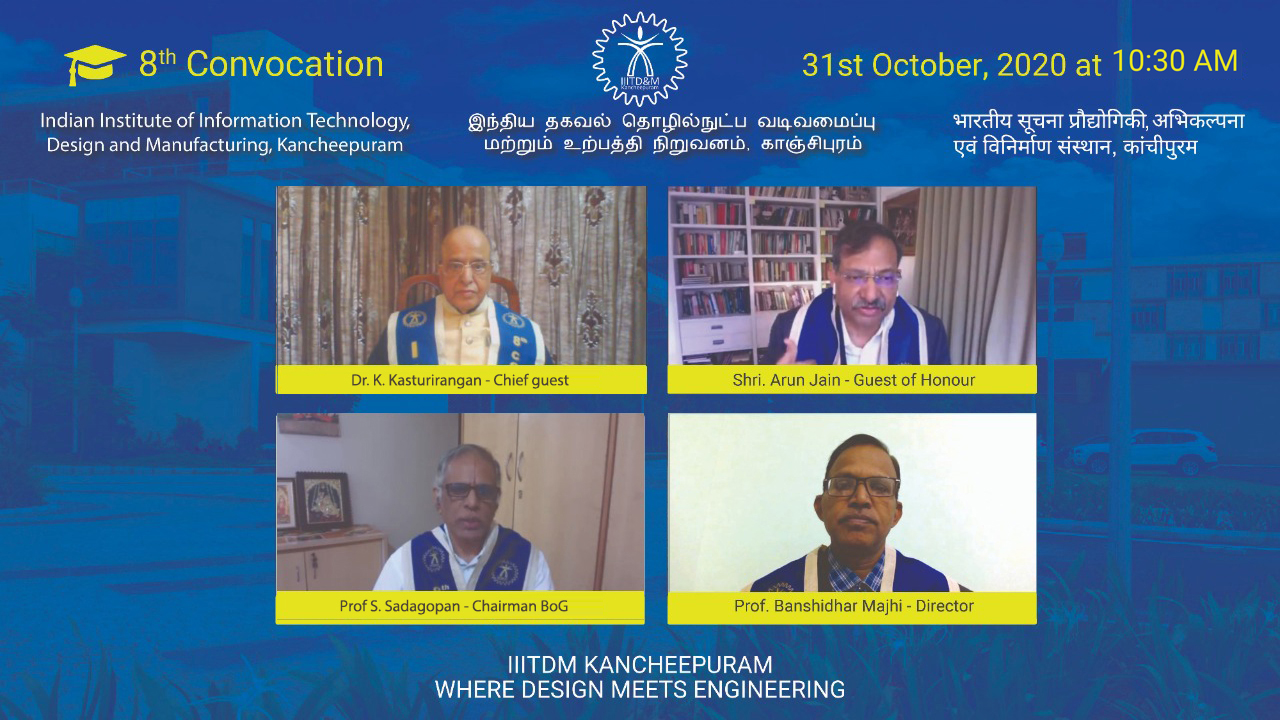
He was speaking at the virtual convocation address of the Indian Institute of Information Technology, Design & Manufacturing (IIITDM), in Kancheerpuam.

“As a crucial step to lead India into the 21st century and the fourth industrial revolution, multidisciplinary education is central. Engineering schools, such as the IITs and even your institution, will move towards more holistic multidisciplinary education with more arts and humanities, while arts and humanities students will aim to learn more science. All will make an effort to incorporate more vocational subjects and soft skills,” Kasturirangan said.

He said IIITDM with its plans for bringing multidisciplinarity and holisticity to its various courses could be in the forefront of creating world-class innovators and producing seminal ideas coming out of a thinking process that cuts across disciplines by marrying science education with arts and humanities and other fields.

Dr Kasturirangan said, “The vision of India’s new educational system has been crafted to ensure that it touches the life of each and every citizen consistent with their needs and necessities besides creating a just and equitable society. The approach is to realize a new system aligned with aspirational goals of 21st century education while remaining rooted to India’s value systems and ethos. The policy provides an integrated, yet flexible approach to education.

"The approach is to realise a new system aligned with the aspirational goals of 21st century education while remaining rooted to India's value systems and ethos. The policy provides an integrated, yet flexible approach to education," he said.

According to him, the new education policy has kept the interconnectedness of the various phases of education in mind and how the same will enable continuity, coherence and processes to ultimately realise an end-to-end educational roadmap for the country.

"Major emphasis is given in the policy to the aspect of holistic, multidisciplinary education as a foundational component at all levels of education," he added.

Delving on the higher educational system in the new education policy, Kasturirangan said the holistic nature of education, also called liberal education in contemporary discussions, traces its origin to the age-old idea of liberal arts discussed almost 1400 years ago in the classical Indian texts on education like Banabhatta's 'Kadambari', wherein a truly educated person is described as one who had mastered all the 64 kalas - a composite of a number of multidisciplinary subjects.

The former ISRO Chairman advised the fresh graduates to have conviction in whatever they do and cited his experience at the space agency.

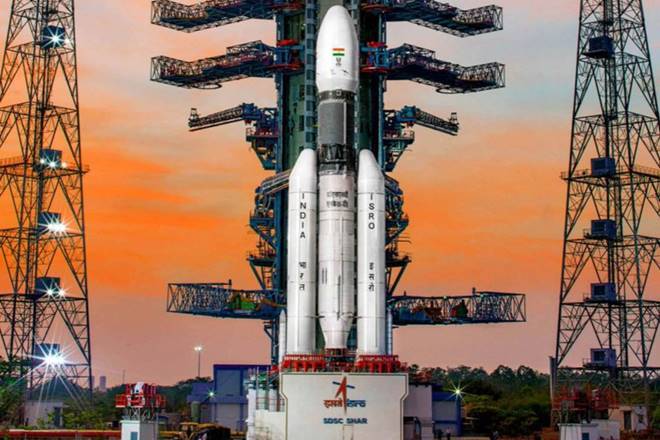
“I still remember the events in ISRO related to the failures of the first two Augmented Satellite Launch Vehicles (ASLVs). Even though a sense of despondency overtook us initially, we did not allow the setback to override our resolve to succeed,” he said.

According to him, the critical analysis and the in-depth assessment of the problems and the technology and quality issues that were addressed really paved the way for the success of the present generation of Polar Satellite Launch Vehicles (PSLVs) and the Geosynchronous Satellite Launch Vehicles (GSLVs).

“In analysing the failures, we got an insight into the inadequacies and the marginal nature of our initial design. Further, our courage of conviction made us work with renewed vigour to succeed, which we did. I have often felt that life can teach you more from a failure than through success,” Dr Kasturirangan said.

A total of 306 students graduated during the eighth Convocation of Indian Institute of Information Technology, Design and Manufacturing - Kancheepuram held virtually today (31st October 2020). It is an ‘Institute of National Importance’ coming under the Ministry of Education, Government of India, and located near Chennai, Tamil Nadu.

For the Current Academic Year of 2020-21, the Institute launched three new M.Tech. programs in Advance Robotics, Power Electronics System Design and Computer Science and Engineering to empower the young engineers of India with specialized skill sets and to face the technological challenge of the future. Information Technology (IT) drives both undergraduate and postgraduate education in the Institute with focus on Design and Manufacturing as two major verticals.

The Degrees were awarded virtually in the presence of Dr. K. Kasturirangan, Chairman, National Education Policy (NEP) 2020 Committee, who was the Chief Guest, Shri. Arun Jain, Chairman and Managing Director, Intellect Design Arena, Chennai, the Guest of Honour, Prof. S Sadagopan Chairman, Board of Governors, IIITDM Kancheepuram, Prof. Banshidhar Majhi, Director, IIITDM Kancheepuram, faculty and staff of the Institute.

Addressing the Students, Prof. S Sadagopan Chairman, Board of Governors, IIITDM Kancheepuram, said, “The year 2020 will go down in history as a very special year when the world witnessed the Covid-19 pandemic causing enormous difficulty to millions of our brothers and sisters. Practically, everyone on this planet has been impacted by COVID-19. IIITDM students and faculty are no exception. You all had to stay home for nearly half of your last Semester and face lots of difficulties particularly by the less-endowed students and those who had limited access. It must have been equally challenging for many of your faculty members who had to adapt to new forms of teaching. Together, the students and the teachers could complete your studies without compromising on quality, thanks to technology!”

Prof. Banshidhar Majhi, Director, IIITDM Kancheepuram, said, “IIITDM Kancheepuram was established in the year 2007 by the Ministry of Education, Government of India, with a specific mandate to excel in IT, and IT-enabled Design and Manufacturing-focused education and research. In the present Convocation, Degrees will be awarded to 306 students, out of which 146 degrees are B. Tech., 112 are Dual Degrees, 41 are M.Tech., 2 are M.Des. and 5 Ph.Ds. Apart from this, institute medals will be conferred in various categories. The institute follows an inter-disciplinary curriculum and CBCS from its inception with thrust on ‘Design Thinking’ and ‘Product Development’.”